History of the Granton Gas Holder
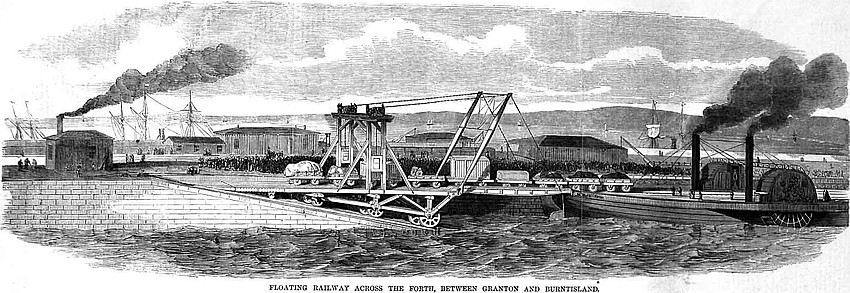
Floating railway Granton
Victorian Granton
Industrial history of Granton waterfront began in the early years of Victorian era with a new created deep water harbour port with its own rail link, opened on 28 June 1838, the day of Queen Victoria Coronation. A large new gasworks was constructed at Granton on around 110 acre site west of Granton Harbour, bought by the city, 60 years later, between 1898 and 1906. In the same period of time, 30th July 1900 an act of parliament brought the harbour within the boundaries of The city of Edinburgh.
Gas works were to serve Edinburgh and Leith, responding to the growing demand for gas both for industry and for serving the city and its citizens. The gas was produced from coal. “In 1902 a spur was laid which ran off the Caledonian line and into the gas works. This brought coal and ither goods to the gas works and a station was build so that workmen could board a train at Princes Street Station and travel straight to their place of employment.A short line called the Mineral Line (also known as the Duke's Line) was also laid between the gas works and the harbour for bringing in coal and taking out coke and tar.” (Gracie, 2003)
The coal gas was present in Edinburgh from 1818. As James Gracie writes in his short story of Granton (“Stranger on the Shore, a short story of Granton”), since then there have been a few rival companies distributing coal gas, but after years of competition “in 1888 both Edinburgh City Council and Leith Town Council decided that it would be most effective if there was one overall gas production plant for both towns “ and in 1897 they decided to build a new single-site gasworks for the future expansion. The land of 106 acres have been purchased from the 6th Duke of Buccleuch for £124.000 .
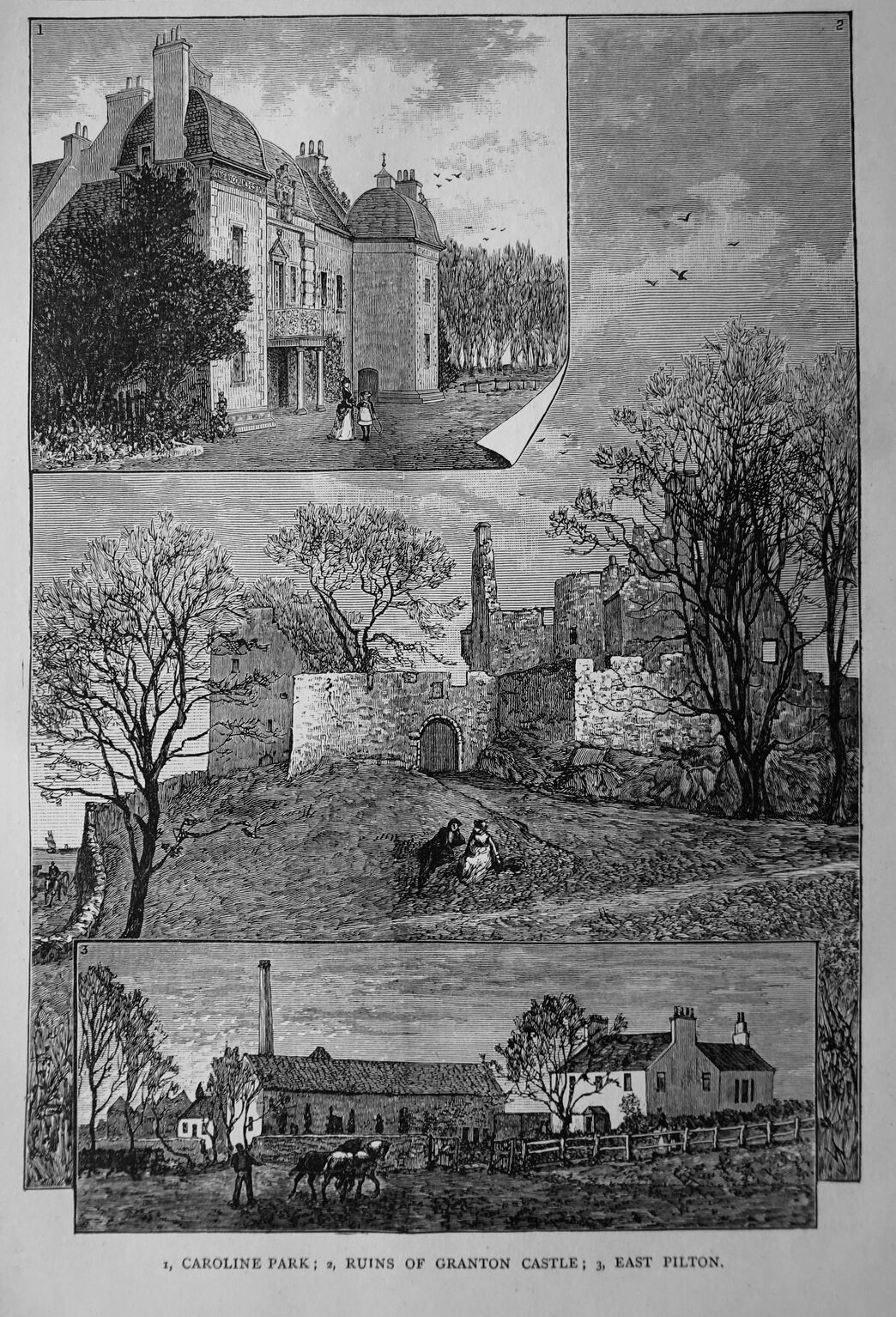
From Volume 6 Page 309 of Old and New Edinburgh (Published by Cassell and Company in 1880)
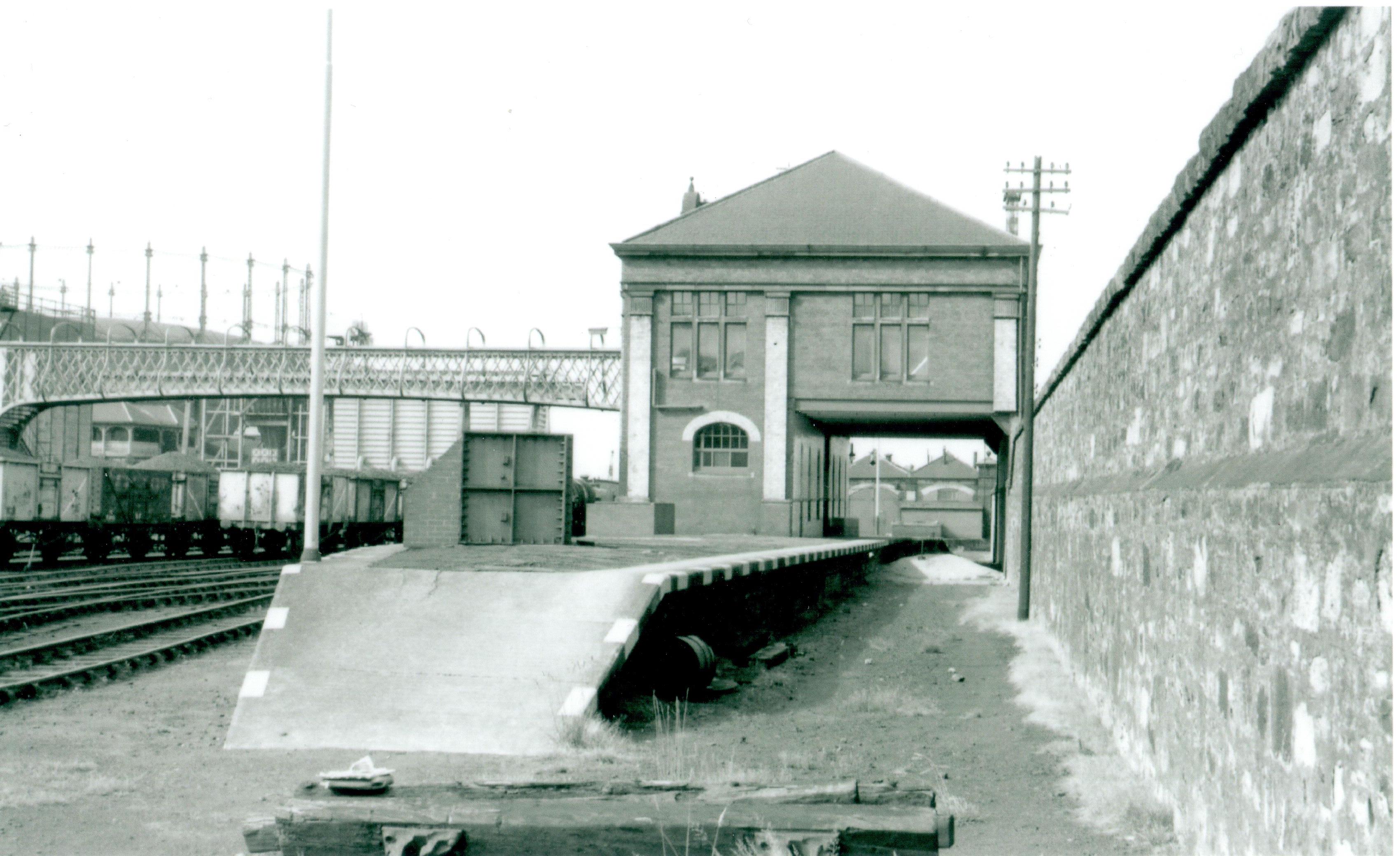
Granton Train Station in 1960s – author unknown. Private collection EK.
First Granton Gas Holder
For the design was responsible engineer Walter Ralph Herring and his initial idea was much greater from it actually built. Herring wanted eight gas holders planned, seven gas retort houses and a deep sea harbour on the shoreline. That time the only one – our , now B-listed, holder was created. Granton railway station and Pumping and Meter houses were build in Edwardian style, from red and yellow brick.The main entrance to the Gas Works is still there – can be seen at the entrance of Edinburgh College e.g. while bus trip.
Production started earlier, although The Gas Works was open with a grand ceremony with many speeches, orchestra show and a large dinner on 27th February 1903. “The whole thing was illuminated by gas jets mounted on the cast iron thistles and roses which adorned the outer lattice work on the holder , and which were four feet high. “ (Gracie, 2003)
If you are more interested in history of gas production and how gas holder works check this video on youtube. Check this video on youtube
The first and long serving narrow gauge locomotive was named Esme and currently is owned, like many other industrial machines from Granton Gasworks, by National Museum Scotland, at Granton Collection Centre nearby.
Second Granton Gas Holder
In the 1920 Leith became part of the Edinburgh city. Running of the plant with over 900 workers was now under the Edinburgh City Council gas committee responsibility only. In 1928 a second gas holder was constructed. “The works were never bombed [while WW2], even though German bombers flew up the Forth. The joke was that this was because number 2 holder had been bought from German company called Mann and Hitler had ordered it to be spared as it hadn’t yet been fully paid for.” (Gracie, 2003) . While World War 2 Granton Rail Station was closed in 1942 as transport links to the area improved.
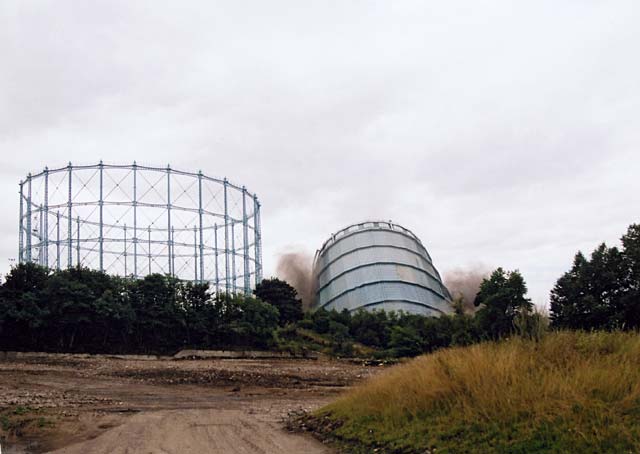
Gas Holder Demolition in 2004, credit: Peter Stubbs
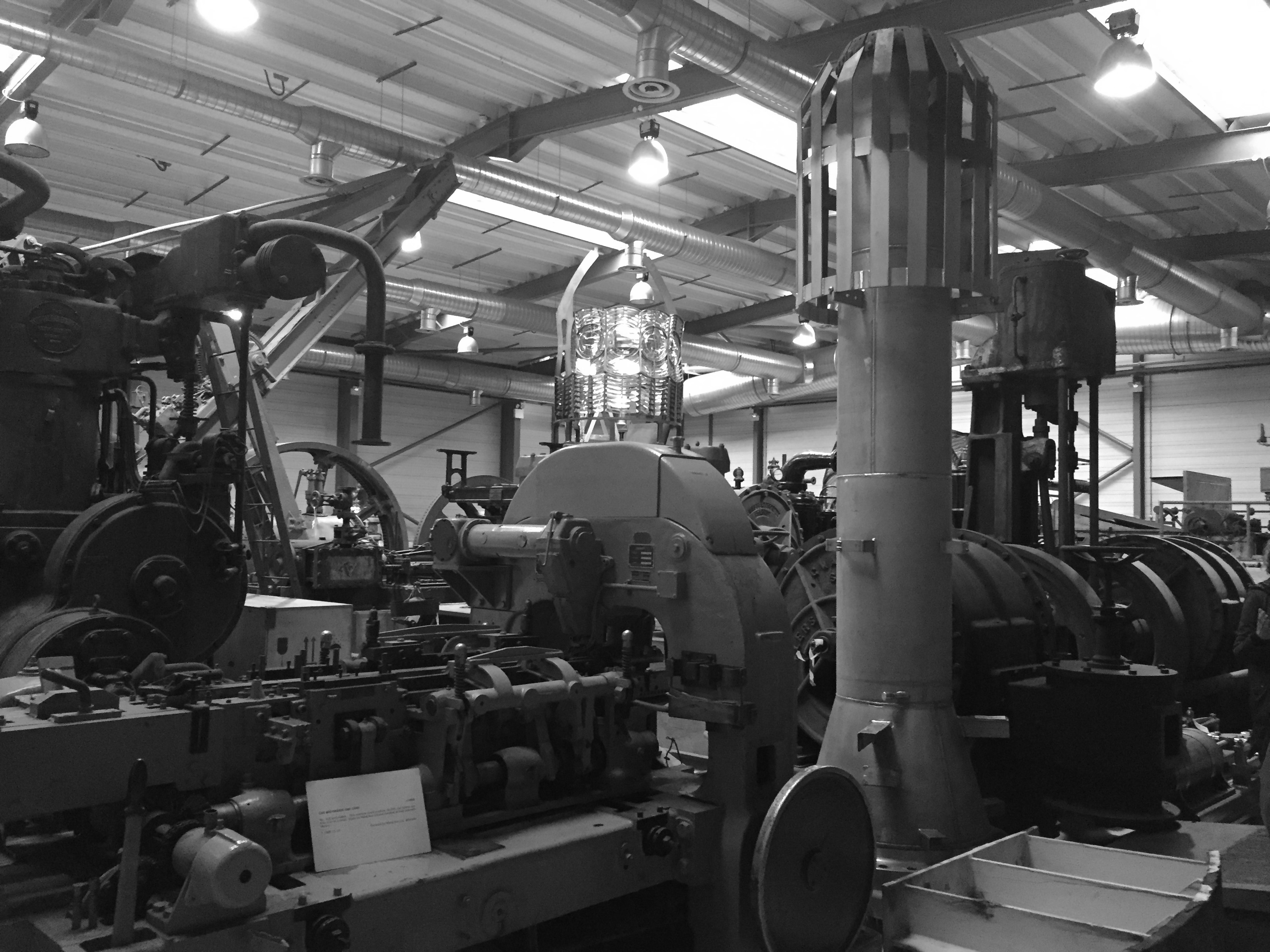
Granton gasworks heritage in National Museum Scotland Collection centre - credits: Private collection EK.
After World War 2
After the war the gas works were nationalised. It followed a great local discussion of the new paint colour of the gas holder No 2 – “grey (would be more resistant to corrosion, would camouflage the holders in the event of another war, would cost less than golden) versa gold ( warm and cheerful colour would harmonise with the ‘varying backgrounds seen from many different viewpoints’ and would have better reflective properties which would diminish the outline of the holder) with sky blue as an alternative. Planning Committee decided that it wasn’t competent enough in this topic and asked the opinion of Royal Fine Arts Commission. In the end the holder was painted blue.” (Gracie, 2003)
By the 1960s Granton Gasworks was the largest single gas-producing unit in Scotland. By the late 1960s and 1970s natural gas from new pipeline delivered by the North Sea replaced coal gas, Granton gas works had to adapt to also store the fuel and deliver to the customers, and to do so the erecting of Gasholder No 3 happened in 1966.
Privatisation of Gas Works
In 1986 the gas industry was denationalised and in 1987 Granton Gasworks was ceased the production of gas and by 1992 it was used to store natural gas only. Some buildings were demolished at this time. (Granton History Group , 2007)
In 1998 Gasholders No 2 and 3 were demolished. A 15 min long video of this operation is still available on Youtube thanks to it’s author John Faulkner. Here
In the same time Gasholder No 1 and Granton Station became Category B Listed buildings by Historic Scotland and for over 20 years were little bit like an abandoned forgotten corner. As part of the redevelopment of the Edinburgh Waterfront new offices of Scottish Gas were built on the former gasworks site, which also happened to the previous Telford College campus.
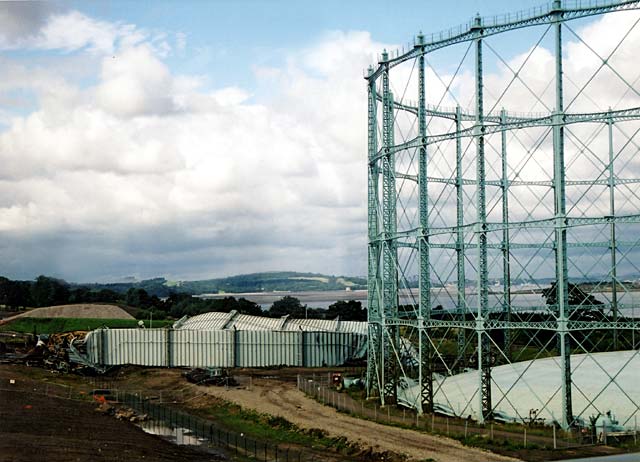
Gas Holder after Demolition in 2004, credit: Peter Stubbs

Granton Gasworks from the Crags 1999 - George Hunter
Granton Gas Holder in memories
Granton Gasworks Holders were always one of Edinburgh’s waterfront most famous landmarks visible form large distance from both the land and the bay. And are part of life many of people from several generations. “II remember them grew up seeing them every day “ – writes Neil on Facebooks’s Lost Edinburgh Group. “Oh, the memories! Good old Pilton” – writes Andrew. “My uncle was a boilermaker there” – from Alistair. “My grandad was one of the men who painted them green during WW2 and then back to blue again” – from Ben. “Did ye’ go fur a swim in the hot water quarry??” – asks Jack. “As a kid we always wanted to go to the top of the gasometers. I always wish a had done” – revealed David.
Revitalisation of Granton Waterfront
In 2020 a new chapter has begun for Granton Gas Holder in north Edinburgh. The City of Edinburgh Council is an owner of the site again – owns around 50 Ha of land within Granton Waterfront area and approved a giant plan for modern, exemplar net zero carbon development with its key partners including the Scottish Government, National Museums Scotland, National Galleries Scotland, Scottish Futures Trust and Edinburgh College. The Granton Gas Holder for 2 years is now under the care of Edinburgh College and already creates new memories as a XXI century Granton’s icon. The train station building is under ongoing restoration and in 2022 will be used as a WASPS place – charity that provides affordable studios to supports artists, art organisations and creative businesses.
Great video document about history of Granton made by Edinburgh College TV you can watch Here
While writing this text, I used books: “Stranger on the Shore. A short history of Granton” by James Gracie, “Edinburgh at work. People and industries through the years” by Malcolm Fife, Granton History Group website www.grantonhistory.org and “Lost Edinburgh” memories group on Facebook
Diwali illumination of Granton Gas Holder, 2021, credits: Fabio Scalici